
Finding Little Elm Resident Records
Little Elm has no single official roll of everyone who lives in town. The useful trail depends on the question. A current property address begins with a tax account and parcel map. A past transfer begins in the recorded-instrument index. A specific name can be checked against the record category that actually created it, such as a voter-status entry, court docket, marriage index, or historical directory. Each source has a narrow job. A tax owner can differ from an occupant, and a court party may live elsewhere. A careful search keeps every role and date distinct.
Start with exact labels. Keep a property location separate from an owner mailing address, and keep a postal city line separate from Little Elm town limits. Record a result’s date, custodian, and source URL. That small discipline makes it much easier to correct an old result or explain why two records use different addresses.
- Search the property location or account number in Denton County Tax Web when an address is known.
- Open the parcel map and retain the account, legal description, subdivision, and municipal context.
- Use the County Clerk’s official-records index for grantor, grantee, or legal-description research.
- For a historical household, consult library directories, newspapers, cemetery indexes, and the Little Elm community histories.
- When an online channel lacks a record, request the defined existing record from its actual custodian.
Little Elm Resident Records Custodians
Denton County offices hold most records that tie people, parcels, and recorded acts to Little Elm. The Town of Little Elm adds municipal archives, planning material, permits, and court routes. The three contacts below are practical first stops for a record request or a portal question. They do not hold the same files, so identify the record type before calling.
Denton County Clerk Recording
1450 E McKinney St
Denton, TX 76209
940-349-2012
For a long address-by-address trail, the county property and clerk systems have more depth than a name-only search. The Little Elm street-address directory explains that route without treating an owner field as proof of occupancy.
Little Elm Tax Fields That Matter
Denton Tax Web separates four ways to search: account number, owner name, owner address, and property location. Property Location is the appropriate first field for a street question. Owner Address is a mailing field. That distinction matters in Little Elm because a company, trust, or absent owner may receive a tax bill somewhere other than the parcel. Include inactive accounts only for historical work and label them as such. Pay status is a tax filter, not a resident marker.
| Tax Web field | Use for | Limit to preserve |
|---|---|---|
| Property Location | Exact situs and street search | Does not name every person at the address |
| Owner Name | Discovering tax accounts | Namesakes and entity ownership need checking |
| Owner Address | Displayed mailing record | It is not the property location |
| Account Number | Repeating a known parcel search | Account scope and history must be checked |
A capture of the Denton County Tax Web search form shows the available search routes and status filters.
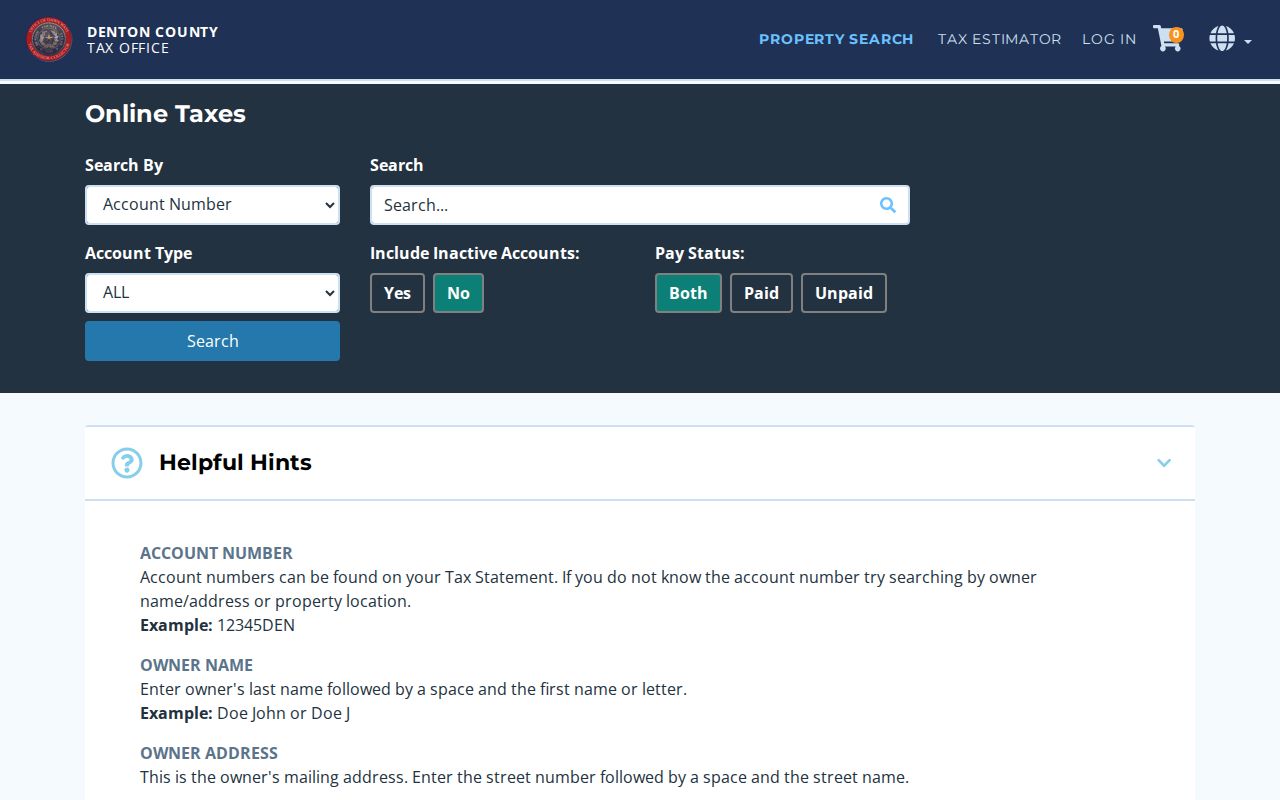
Use the form to locate a public tax record, then compare its field labels with the parcel map and recorded instrument before treating it as a resident lead.
Little Elm Parcel and GIS Context
DCAD GIS supplies parcel geometry and layers that can show a site address, owner and mailing display, legal description, subdivision, survey abstract, neighborhood, and map context. Denton County GIS adds municipal boundaries, voter precincts, roads, floodplain, emergency districts, and transportation layers. These are geographic tools. A parcel polygon can establish which parcel touches another, but it does not create a verified list of people nearby.
Begin with the exact parcel, retain its account or property ID, then use the legal description to compare deed and plat records. When the city line, tax jurisdiction, or street spelling differs, check the map’s date and layer source. The county’s map layers explain jurisdiction; they do not turn a pin into a legal survey.
Denton County GIS publishes map-layer routes and contact information used to place an address in its local context.
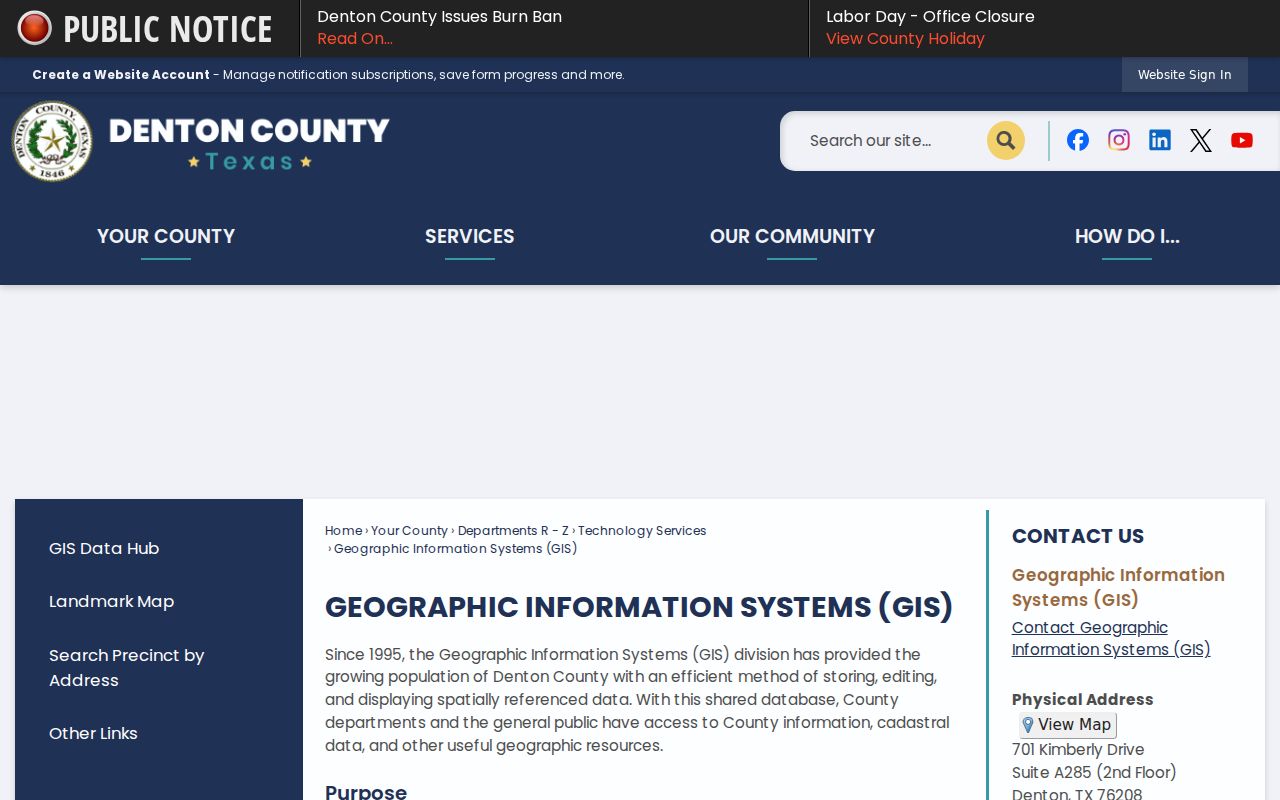
The GIS directory is useful when a record needs a boundary, precinct, or road-layer check alongside the parcel data.
Little Elm Deed Index Clues
The County Clerk’s official-records portal handles real-property searches by grantor, grantee, subdivision, document type, document number, recorded date, instrument date, book, volume, page, lot, block, and legal description. A grantor conveys an interest; a grantee receives one. Those roles help trace a transfer, but neither role alone confirms that person’s present residence. The public portal also displays a notice that its Department record is certified through September 2, 2021. Preserve that notice as a portal status, not as a statement about all county records.
For a current parcel, compare the deed’s legal description with the tax account. For a historical chain, search the earlier owner as grantor and the later owner as grantee, then match lot, block, plat, tract, or survey references. Images and copies may have different access conditions from the index. The Clerk counter, mail route, and TSLAC microfilm are meaningful fallbacks when the online path ends.
The Denton County Clerk describes its real-property, vital, civil, probate, and other county responsibilities.
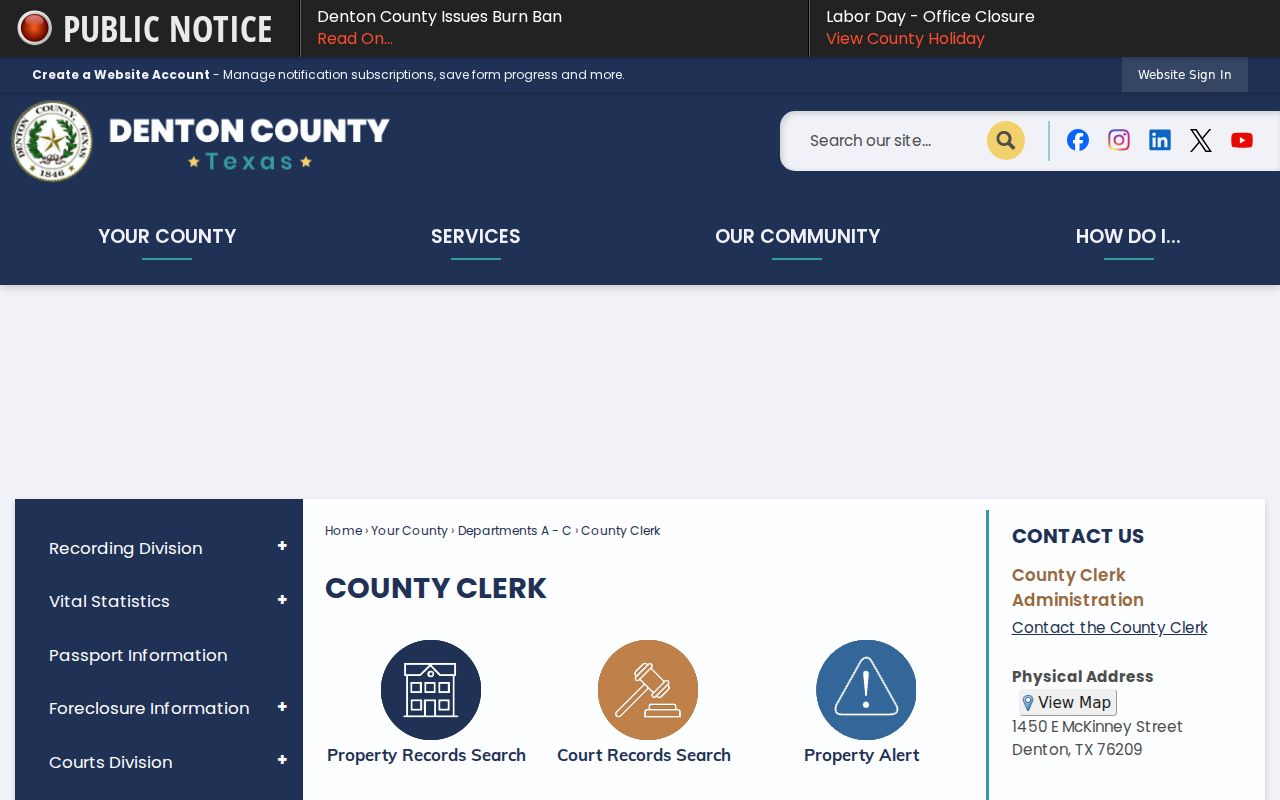
The Clerk’s office page helps distinguish a recorded-instrument request from a tax, court, or historical-library question.
Current Little Elm Resident Sources
Current Little Elm records are a set of narrow public sources rather than a complete directory. A property account displays tax and parcel fields. Voter channels confirm registration status within statutory limits. Recorded instruments document a transaction. Association certificates identify administration and declarations, not members. Keeping each category separate avoids turning a public field into a broader claim than it supports.
| Little Elm source | What it can show | Custodian | Access route |
|---|---|---|---|
| Tax account and parcel | Owner, mailing, situs, account, and legal fields | Denton County and DCAD | Online search, GIS, counter |
| Voter status | Status, county, precinct, and permitted identifiers | Texas and Denton elections offices | Status lookup or authorized request |
| Official-records index | Recorded parties and instrument details | Denton County Clerk | Portal, counter, or mail |
| HOA certificate | Association and declaration administration | Texas HOA certificate search | Public search with stated limits |
For one named person, begin with the record type that fits the question and compare at least two independent sources where possible. A historical directory may support an earlier connection, while a modern property record has a different date and purpose.
Little Elm Voter Record Boundaries
VoteTexas provides an individual registration-status route using a VUID, a Texas driver-license number when supplied, or a first and last name. A result may confirm status, county, precinct, and election-office context. It is not a current-residence certificate. A record may use a mailing address, be in suspense, contain an older registration detail, or protect an eligible voter’s address. Texas Election Code section 13.004 protects Social Security, driver-license, DPS-identification, and certain phone and address information.
The statewide voter-file request is more detailed but has rules of its own. The SOS form offers status, date, age, gender, election, and geography selections; it requires a notarized affidavit, a $75 deposit, and a noncommercial-use promise. The form says furnishing occurs no later than the fifteenth day after receipt, subject to the stated process. Ask the elections office which channel and fields are appropriate for the defined request.
Little Elm Archive Search Routes
The town archive is a useful source for agendas, public notices, planning, annexation, and related municipal material. Its advanced search exposes keywords, archive selection, board selection, and date-range controls. Search a street, subdivision, legal description, or project term, then read the original meeting record. An agenda applicant or attendee is not automatically a Little Elm resident, so pair any name with a date, address field, and record purpose.
Building Safety and MyGov add permit, certificate, inspection, and registration paths. Their public pages describe procedures but do not establish a complete person index. For modern address history, archive and permit materials work best beside parcel, deed, and plat records.
The Little Elm archive advanced search makes its keyword, board, archive, and date filters visible.
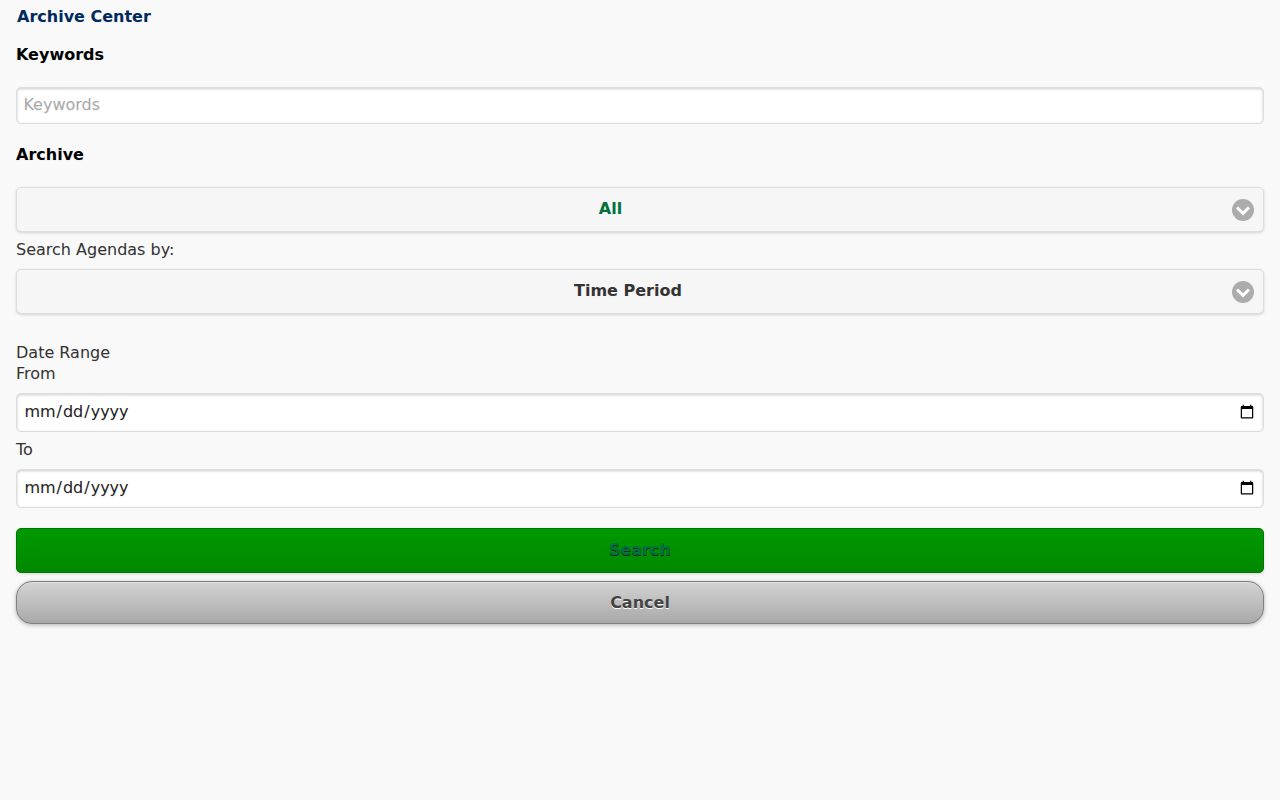
The archive screen is a practical place to test a subdivision, annexation, or road term when an address changed over time.
Historical Little Elm Resident Directories
Historical resident research shifts from current parcel tools to shelves, reels, and digitized pages. Little Elm Library points to the 1957 112 Years in Little Elm Community and the 1983 A Salute to the History of Little Elm. Denton Public Library Special Collections adds telephone directories back to 1918, Denton city directories from the 1930s, newspaper indexes, church histories, cemetery surveys, yearbooks, and local histories. Those materials can preserve a household at a particular time, not a current identity.
UNT’s 1923 and 1939 Denton-directory examples show names, relationships, occupation or student notation, telephone or residence forms, and abbreviations. Little Elm appears in some historical post-office references, but a post-office listing is not a complete household directory. The Little Elm city directories collection explains how to read those snapshots and trace a household without confusing a Denton listing for an annual Little Elm roll.
- Roll
- A list created for a particular administrative purpose, not a universal population list.
- Index
- A finding tool that points to a record; it may not include the underlying image or file.
- Parcel
- A mapped unit of land identified by an account, legal description, or both.
- Criss-cross directory
- An address-oriented directory section used with an alphabetical section to study an earlier household.
Little Elm Postal and Town Limits
Little Elm address research requires two labels: the postal city and the legal municipality. USPS lists the Little Elm facility at 1012 W Eldorado Pkwy in ZIP code 75068. The town’s Library Kiosk at 1801 Navo Road uses an Aubrey, Texas 76227 mailing line, even though it is a Little Elm service site. That documented example prevents a common error: neither a ZIP code nor a postal city line proves incorporation.
When an address looks inconsistent, retain the USPS string exactly, compare the property situs and owner mailing fields, open the DCAD or county municipal layer, and consult town boundary, annexation, or tax-jurisdiction information. Do not assume every north-of-US-380 address shares the kiosk line. The research did not locate a complete official Little Elm ZIP-boundary list.
Note: Postal labels, parcel boundaries, and town limits may change on different schedules, so recheck the official source before relying on a live address result.
Little Elm Records Request Fallback
When a portal has no result or its fields are unavailable, ask for an existing record rather than a custom resident list. The Texas Public Information Act, Government Code Chapter 552, is the normal written-request route for many town and county administrative records. State guidance says an agency should promptly produce public information and provide a written estimate when anticipated charges exceed $40. A requester generally has ten days to respond to an estimate. Courts are different: judicial records follow Texas Rule of Judicial Administration 12 rather than the ordinary PIA route.
Name the custodian, record category, address or legal description, date range, and requested format. Keep the acknowledgment, estimate, redaction explanation, and production date. The County Clerk, District Clerk, town archive, library, and TSLAC each offer different fallback paths; an online no-result does not prove that the counter or archive has no record.
Little Elm Record Gaps and Protection
Some gaps are historical. Denton County’s 1875 courthouse fire destroyed most early county records. TSLAC lists deed runs, direct and reverse indexes, tax rolls, probate material, and poll-tax lists, but also notes a missing Volume 61 and later unfilmed portions of Volumes 75 and 78. Search tax rolls, probate, newspapers, church material, cemetery surveys, and family histories when a chain stops instead of inventing a link.
Other gaps are required protections. Birth and death copies have eligibility rules, while Texas opens birth records after 75 years and death records after 25 years subject to exceptions. Eligible people can use the Texas Address Confidentiality Program, and election data has protected fields and address restrictions. Sealed, juvenile, victim, and protected-address records may be unavailable or redacted. Respect the result’s limit and ask the custodian about a lawful correction or access route.